164 Riddles for Nurses with Answers (Funny, Tricky & Heartfelt)
Type nursing riddles into a search box and you have found the right ward: this is a full collection of riddles for nurses, built from the tools, shifts and small kindnesses of the job. Every answer is something real from nursing life, hiding in plain sight.
Some rounds are gentle warm-ups about scrubs and stethoscopes, while the tricky and brainy rounds reward the sharp observation nurses use every day. You will also find true nursing facts, a break-room game and a guide to writing your own riddles for nurses.
Read each riddle aloud, guess before you peek, and check the short explanation under every answer. By the final round you will be spotting doses, duties and quiet acts of care in every clue.
💡 Did You Know?
- Florence Nightingale (1820–1910) is honoured as the founder of modern nursing: organising care for wounded soldiers during the Crimean War, she cut death rates sharply by improving hygiene and living standards.
- Nightingale became famous as “the Lady with the Lamp”, because she made her rounds of the wards at night, lamp in hand, checking on the wounded.
- International Nurses Day is celebrated every year on 12 May — the anniversary of Florence Nightingale’s birth in 1820.
- The nursing school Nightingale founded at St Thomas’ Hospital in London was the first secular nursing school in the world.
- The stethoscope on a modern ward has a long pedigree: it was invented in 1816 by the French physician René Laennec.
🎯 Riddle of the Day
I beep beside the bed through the long night hours,
Tracing peaks and valleys in glowing lines.
I watch the heart’s rhythm so the ward can rest. What am I?
Think it over while you work through the rounds below — no peeking, because this one has no answer today. When you are ready to swap the ward for the open sea, our ocean riddles with answers are making waves and waiting.
🩺 Riddles for nurses with answers
Start with the everyday sights of the ward — the uniform, the badge, the bell beside the bed — the things every nurse reaches for without thinking.
- Rainbow-coloured yet all business, I am washed and ready before every shift, and patients spot me the moment I walk in. What am I?
Answer: A nurse’s scrubs. Scrubs are the washable work clothes of the ward, chosen for comfort, pockets and easy cleaning between shifts. - I am pinned where everyone can see me, and I introduce the nurse before a single word is spoken. What am I?
Answer: A name badge. A name badge tells patients who is caring for them and what that person’s role is, which builds trust fast. - I hang upside down on a chest, ticking quietly, so busy hands stay free and clean for care. What am I?
Answer: A fob watch. A fob watch pins to the uniform and is read with a downward glance, keeping the nurse’s hands free for patients. - I travel under one arm all shift, carrying charts, lists and notes from bed to bed. What am I?
Answer: A clipboard. The clipboard is the ward’s portable desk, keeping paper notes in order during rounds. - I am a pocket-sized torch that peeks at pupils and throats without ever blinding anyone. What am I?
Answer: A pen torch. A pen torch gives a soft, focused light for quick checks of eyes and mouths during assessments. - Every bed keeps me within reach, and one press of me brings help hurrying down the corridor. What am I?
Answer: The call bell. The call bell lets a patient summon a nurse at any hour without leaving the bed. - I am the daily walk from bed to bed, when the whole team checks progress and plans the day. What am I?
Answer: The ward round. A ward round is the team’s regular visit to each patient to review treatment and recovery. - I am the famous nurse who carried a lamp through the night wards of the Crimean War. Who am I?
Answer: Florence Nightingale. Florence Nightingale (1820–1910) organised care for wounded soldiers and became known as the Lady with the Lamp. - I am the famous set of four measurements — temperature, pulse, breathing and blood pressure — taken again and again. What am I?
Answer: Vital signs. Vital signs are the body’s key measurements, and nurses track them to spot changes early. - I am the person at the very centre of the ward, the reason every rota, chart and round exists. Who am I?
Answer: The patient. Every part of nursing exists for the patient, whose comfort and recovery guide the whole team’s work. - I am the short meeting where the day team tells the night team everything that matters, patient by patient. What am I?
Answer: The shift handover. A careful handover passes on medicines, changes and worries, so care continues safely between shifts.
📄 Riddles for nurses with answers PDF
Every ward runs on paper as much as on medicine — charts, plans and labels that follow each patient. These ten riddles for nurses are all printable, portable or pinned to the record.
- I am the folder that travels with the patient, holding notes, readings and results from the whole stay. What am I?
Answer: A patient chart. The patient chart is the running record of care, observations and treatment for one person. - I am the written map of one person’s care — goals, needs and daily steps, agreed by the whole team. What am I?
Answer: A care plan. A care plan sets out what a patient needs and how the team will meet those needs, day by day. - A doctor writes me, a pharmacist checks me, and a nurse gives exactly what I say. What am I?
Answer: A prescription. A prescription is the written instruction for a medicine, including the dose and how often it is given. - I circle a wrist with a name and a birthday, and I am checked before every medicine and meal. What am I?
Answer: A hospital wristband. The wristband identifies the patient, and nurses check it constantly to match the right care to the right person. - I am the letter that leaves the hospital with the patient, summing up the stay for the doctor back home. What am I?
Answer: A discharge summary. A discharge summary explains what was treated, what changed, and what follow-up care is needed. - I am the grid on the staff-room wall that decides who works days, who works nights and who finally rests. What am I?
Answer: The shift rota. The rota is the schedule that shares shifts fairly across the team, around the clock. - I am the form a patient signs to say yes, after the risks and benefits have been explained. What am I?
Answer: A consent form. A consent form records that a patient understands a treatment and agrees to it freely. - I am small, sticky and bright, and I remind the next nurse about one small thing that must not be forgotten. What am I?
Answer: A sticky note. Sticky notes are the ward’s tiny memory aids, flagging small tasks before they slip away. - I am the small card that tells a patient when to come back and be seen again. What am I?
Answer: An appointment card. An appointment card confirms the date and time of the next visit, so nobody has to rely on memory. - We are the running diary of the ward — every visit, dose and change written down as the shift unfolds. What are we?
Answer: Nursing notes. Nursing notes record care as it happens, so the whole team can see exactly what has been done.
🧠 Tricky riddles for nurses
Think twice — these hide a twist, a double meaning or a quiet surprise, the way a busy ward so often does.
- You can feel me at the wrist and count me in a minute, yet you will never see me with your eyes. What am I?
Answer: A pulse. A pulse is the surge you feel as each heartbeat sends blood through the arteries, most easily counted at the wrist. - I follow every nurse down every corridor, copy each movement exactly, yet never touch a single patient. What am I?
Answer: A shadow. A shadow mirrors every move but has no substance, so it can follow anywhere the light allows. - I answer in the empty stairwell and repeat the last words of everyone who calls, yet I have no voice of my own. What am I?
Answer: An echo. An echo is sound bouncing back off a surface, repeating what it hears without adding a word. - Every night ward hopes for more of me, and a single call bell can shatter me in a second. What am I?
Answer: Silence. Silence on a ward means everyone is resting — until one bell rings and the quiet is gone. - I am full of holes from top to bottom, yet I hold water for the morning wash. What am I?
Answer: A sponge. A sponge is mostly holes, and those tiny spaces are exactly what soak up and hold the water. - The more I work at drying, the wetter I become, shift after shift beside the sink. What am I?
Answer: A towel. A towel absorbs the water it wipes away, growing wetter with every job it finishes. - Every patient hopes to meet me stronger and healthier than today, yet nobody can ever hold me. What am I?
Answer: Tomorrow. Tomorrow is always one day away — the day patients picture when they imagine themselves recovered. - I can be made and kept without hands, and broken by a single careless sentence. What am I?
Answer: A promise. A promise needs no touch to exist, yet one broken word can end it completely. - I grow longer the longer the clinic runs late, and I am counted in chairs, sighs and shuffled feet. What am I?
Answer: A waiting-room queue. A queue grows person by person at the front of the line, never from the back. - The more steps a nurse takes on a long shift, the more of me are left behind. What are we?
Answer: Footsteps. Every step leaves one more footstep behind — the busier the shift, the longer the trail.
😂 Funny riddles for nurses
Time to lighten the mood — nursing jokes with punchlines weighed, measured and recorded below.
- Why did the thermometer go back to college?
Answer: It wanted to earn a few more degrees. A thermometer already works in degrees — it was simply aiming for a hotter career. - Why do nurses make such good comedians?
Answer: Their timing is always on the pulse. Years of counting pulses give nurses a sense of timing most performers can only envy. - What did the IV bag say to the nurse at the start of the shift?
Answer: “Thanks for hanging around with me”. An IV bag quite literally hangs around all day, drip by steady drip. - Why did the bandage apply for extra shifts?
Answer: It wanted to cover more ground. Covering is what bandages do best — skin on the ward, shifts on the rota. - What kind of music keeps a whole ward happy?
Answer: Anything with a steady beat. Nurses spend the day listening for heartbeats, so a steady rhythm feels like home. - Why did the nurse carry a spoon on the round?
Answer: To stir up a little excitement. Between the medicines and the meals, a spoon is ready for either kind of stirring. - Why do nurses never get lost in a hospital?
Answer: They always follow the vital signs. Signs point the way through the corridors — and the vital ones point to what a patient needs. - What did one glove say to the other at handover?
Answer: “We make a great pair — let’s stick together”. Gloves come in pairs, work in pairs and are changed in pairs, all shift long. - Why did the coffee refuse to leave the nurses’ station?
Answer: It knew the night shift could not run without it. Coffee is the unofficial fuel of the night shift, and it knows its worth. - What is a nurse’s favourite game on a quiet afternoon?
Answer: Hide and seek with the ward’s one working pen. Every ward has one legendary pen that vanishes the moment anyone sets it down.
🏥 Medical riddles for nurses
Clinical clues with a nurse’s-eye view — and if you enjoy thinking like the medical team, our medical riddles with answers go deeper into diagnoses, anatomy and hospital life.
- I am a tiny training session for the immune system, teaching it to beat a germ it has never met. What am I?
Answer: A vaccination. A vaccination shows the immune system a safe preview of a germ, so it can fight the real thing later. - We are the medicines that fight bacteria bravely but can do nothing at all against a virus. What are we?
Answer: Antibiotics. Antibiotics target bacteria only, which is why they cannot cure colds and other viral illnesses. - I photograph the skeleton without opening the skin, turning bones into shadows on a screen. What am I?
Answer: An X-ray. An X-ray passes through soft tissue and is absorbed by bone, leaving a picture of the skeleton. - A few drops of me leave the arm, travel to a laboratory, and come back as a page of answers. What am I?
Answer: A blood test. A blood test reads the story written in a small sample — cells, salts, sugars and much more. - I am the body’s overreaction to something harmless — pollen, peanuts or dust can set me off. What am I?
Answer: An allergy. An allergy happens when the immune system treats a harmless substance as if it were a dangerous invader. - I am the body turning up its own thermostat, making itself uncomfortable for invaders. What am I?
Answer: A fever. A fever means the body’s temperature has climbed above its normal range — one of the ways it makes life harder for germs. - I am a hard white shell that keeps a broken bone lined up and protected while it mends. What am I?
Answer: A plaster cast. A cast immobilises the break, shielding it from knocks until the bone knits itself back together. - I am the invisible gas in every breath, riding the blood from the lungs out to the toes. What am I?
Answer: Oxygen. Oxygen travels from the lungs into the blood, which delivers it to every cell that needs energy. - I am the lub-dub rhythm of life, heard through a stethoscope and felt at the wrist. What am I?
Answer: A heartbeat. A heartbeat is the sound of the heart’s valves closing as it pumps blood around the body. - We are the tiny invaders beaten every day by the simplest weapon on the ward: soap and water. What are we?
Answer: Germs. Germs are microbes that can cause illness, and plain soap and water wash most of them away.
😄 Nurse jokes
Short jokes in the classic question-and-punchline style — cousins of our dad riddles with answers, swapped at the nurses’ station between rounds.
- Why did the nurse keep a crayon in a pocket?
Answer: For the days when the job required drawing blood. Drawing blood is a daily task — the crayon simply takes the phrase literally. - Why are nurses brilliant at parties?
Answer: They always know how to check on everyone. Checking on people is the whole job, so a nurse works a room like a ward round. - What did the new nurse carry everywhere on the first day at a big hospital?
Answer: A map — every corridor looked the same, and losing your patients is frowned upon. Hospitals are mazes — and “losing your patients” is the one pun no nurse wants to live. - Why do visitors always leave the ward smiling?
Answer: The nurses lift everyone’s spirits on every floor. Between the lifts and the lifting of spirits, a good ward raises everyone up. - Why did the nurse love working with the hospital chef?
Answer: Every tray arrived with a side order of good humour. Meals are medicine for morale, and a cheerful kitchen keeps the whole ward smiling. - What did the blood pressure cuff say after a very long day?
Answer: “I am under a lot of pressure — but I always let it go in the end”. Squeezing and releasing is the cuff’s whole career, so the punchline is practically a job description. - What do you call a nurse who tells jokes on the night shift?
Answer: The ward’s official morale officer. On the quiet hours, one good laugh can carry a whole team through to dawn. - How did the patient thank the nurse who told jokes all morning?
Answer: “Laughter really is the best medicine — I feel better already”. A cheerful nurse is part of the treatment, and this patient left with a smile as well as a prescription. - Why did the nurse open the hospital’s accounts book?
Answer: To make sure the care added up. Doses, hours and supplies all have to add up — a nurse checks every column. - What did the night nurse say to the sunrise?
Answer: “Right on time — my shift is over”. For the night team, sunrise is the sweetest sight on the ward’s horizon.
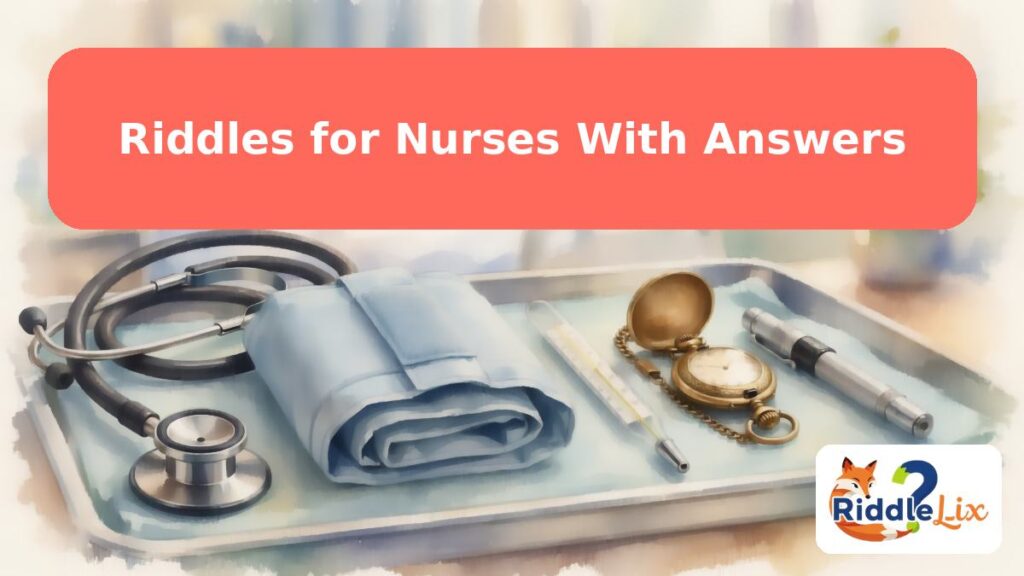
🩺 Caring Tools and Clever Clues
The kit of the trade: instruments that listen, squeeze, drip and measure, each described by the job it does. No set of riddles for nurses would be complete without them.
- Two earpieces, one small drum, and I let a nurse eavesdrop on the music of the chest. What am I?
Answer: A stethoscope. A stethoscope funnels the sounds of the heart and lungs from the chest straight to the nurse’s ears. - I hug an arm tighter and tighter, then sigh and let go, reporting two numbers as I relax. What am I?
Answer: A blood pressure cuff. The cuff squeezes the arm and releases slowly, letting the nurse read the pressure of the blood. - I carry a measured dose in a slender barrel and deliver it with one steady push. What am I?
Answer: A syringe. A syringe measures out an exact amount of medicine and delivers it through a fine needle. - Drop by patient drop, I feed a vein for hours from a bag hung high beside the bed. What am I?
Answer: An IV drip. An IV drip sends fluids or medicines slowly into a vein, one measured drop at a time. - I cup the nose and mouth and serve the breath a richer helping of air. What am I?
Answer: An oxygen mask. The mask feeds a patient a richer supply of oxygen whenever breathing needs support. - We are worn for minutes at a time, changed between every patient, and we guard both sides of the care. What are we?
Answer: Disposable gloves. Gloves protect the patient and the nurse, and they are changed constantly to keep care clean. - I cover the mouth and nose of the carer, catching droplets before they can travel. What am I?
Answer: A face mask. A face mask traps droplets in both directions, protecting patients and staff alike. - I am a chair that rolls, giving tired legs a lift down the longest corridors. What am I?
Answer: A wheelchair. A wheelchair moves patients safely around the hospital, from the ward to scans and back again. - I bend at the back and rise at the knees at the touch of a button, yet I am where patients sleep. What am I?
Answer: A hospital bed. A hospital bed adjusts its height and shape, helping patients rest, sit up and recover in comfort. - I wait charged and ready on the wall, and my two pads can restart a rhythm that has stopped. What am I?
Answer: A defibrillator. A defibrillator delivers a controlled electric shock that can restore a heart’s normal rhythm. - We are the extra legs lent to a healing patient — one under each arm, step by careful step. What are we?
Answer: Crutches. Crutches take the weight off an injured leg while it heals, keeping the patient moving safely.
💉 Daily Duties with a Twist
The rhythm of the working day: readings, rounds and rituals that keep a ward safe, told from inside the task.
- Slipped under a tongue or tucked in an ear, I report the body’s heat in a single number. What am I?
Answer: A thermometer. A thermometer takes the body’s temperature — one of the first clues that the body is fighting illness. - Twice a day I parade from bed to bed with a trolley of tiny cups, checking every name twice. What am I?
Answer: The medication round. On the medication round, each dose is checked against the chart and the wristband before it is given. - I take twenty seconds, cost almost nothing, and stop more infections than any machine on the ward. What am I?
Answer: Hand washing. Hand washing with soap is the simplest and strongest infection defence in all of healthcare. - I arrive warm in a covered bowl, and my daily visit is about dignity as much as cleanliness. What am I?
Answer: A bed bath. A bed bath washes a patient who cannot reach the bathroom, keeping skin healthy and spirits lifted. - Sixty seconds of stillness at the wrist, counting rises and falls, and I reveal how the lungs are doing. What am I?
Answer: Counting respirations. Nurses count breaths for a full minute, because breathing rate is an early warning sign of change. - I am the walk that finds every pillow fluffed, every chart checked and every worry heard before lights-out. What am I?
Answer: The comfort round. A comfort round checks on each patient in turn — pain, position, water and peace of mind. - I am the quiet skill of watching: noticing a colour change, a slower answer, a smaller appetite. What am I?
Answer: Observation. Observation is the nurse’s constant watchfulness, and it catches problems before any machine does. - I am the chart beside the bed that counts every millilitre in and every millilitre out. What am I?
Answer: A fluid balance chart. Tracking fluids in and out helps the team keep a patient’s hydration exactly where it should be. - I am the gentle turn, every few hours, that protects the skin of a patient who cannot move alone. What am I?
Answer: Repositioning. Turning a patient regularly spreads pressure across the skin and prevents painful sores. - I am the last check before any procedure — name, birthday, wristband — asked kindly, every single time. What am I?
Answer: The identity check. Checking identity before care is a small ritual that prevents the wrong treatment reaching the wrong person.
🧠 Brainy Break-Time Riddles
Coffee’s poured and the break room is quiet — if you love puzzles about time itself, our clock riddles with answers are worth a tea break of their own.
- I have hands but cannot clap, a face but no eyes, and the whole ward plans its day around me. What am I?
Answer: A clock. A clock’s hands and face tell the time that organises every round, dose and visit on the ward. - I am tall when I am young and short when I am old, and I light the birthday cakes in the staff room. What am I?
Answer: A candle. A candle burns down as it gives light, so every hour of use makes it shorter. - I have a spout, a handle and a whistle when I am ready — the break room runs on what I make. What am I?
Answer: A kettle. A kettle boils the water for the teas and coffees that power the team’s breaks. - I have pages but no story of dragons — mine teaches the body, bone by bone and muscle by muscle. What am I?
Answer: An anatomy book. An anatomy book maps the human body, and nursing students return to it for years. - I show every corridor, ward and stairwell of the hospital in miniature, pinned beside the entrance. What am I?
Answer: A hospital map. A hospital map shrinks the whole building onto one board, guiding visitors to the right ward. - I hang in the staff room and show a nurse a tired face that copies every expression exactly. What am I?
Answer: A mirror. A mirror reflects whatever stands before it, expressions included, without adding a thing. - I am small, cylindrical and full of stored energy, and I bring dead torches and toys back to life. What am I?
Answer: A battery. A battery stores chemical energy and releases it as electricity whenever a device needs power. - I have four legs and a back, yet I never walk — I wait in the waiting room for the next name called. What am I?
Answer: A chair. A chair offers legs and a back to sit on, though it never takes a step itself. - I am the ward’s eye on the world — you can see through me, but the weather cannot come through me. What am I?
Answer: A window. A window lets light and views pass while keeping wind and rain firmly outside. - I lock the medicine cupboard every night and unlock it every morning, small enough to hide in a pocket. What am I?
Answer: A key. A key keeps medicines secure, and only authorised staff carry one on the ward.
🏥 Hospital Life and Hidden Hints
Every department has its own sounds, smells and secrets — tour the building one clue at a time.
- I am the department where ambulances race and no appointment is ever needed. What am I?
Answer: The emergency department. The emergency department treats urgent cases around the clock, seeing the most serious patients first. - I am the room of magazines, ticking clocks and patient patience, where everyone waits for a name. What am I?
Answer: The waiting room. The waiting room holds everyone whose turn is coming, from the first arrival to the last. - Behind my doors, the lights are bright, the air is cool, and skilled hands repair the body. What am I?
Answer: The operating theatre. The operating theatre is the hospital’s sterile room where surgery takes place. - I am the hospital’s shop of medicines, where every prescription is checked, counted and labelled. What am I?
Answer: The pharmacy. The pharmacy prepares and checks medicines for the whole hospital, dose by careful dose. - I arrive with sirens and flashing lights, carrying a small ward on wheels to the patient’s door. What am I?
Answer: An ambulance. An ambulance brings emergency care to the patient and the patient safely to hospital. - I carry visitors up and down all day, opening my doors on a different ward at every stop. What am I?
Answer: A lift. A lift moves patients, visitors and whole hospital beds between the floors. - I am the warm corner of the hospital that smells of soup and coffee, where staff recharge at noon. What am I?
Answer: The cafeteria. The cafeteria feeds patients’ visitors and hungry staff, and hosts a thousand small celebrations. - I am the first desk every visitor meets, keeper of directions, forms and friendly first answers. What am I?
Answer: The reception desk. The reception desk welcomes arrivals and points every visitor toward the right ward. - I am the quiet room where patients wake slowly after surgery, watched minute by minute. What am I?
Answer: The recovery room. The recovery room is where patients are monitored closely as the anaesthetic wears off. - I am the ward of small beds, bright murals and brave little patients, where parents stay close. What am I?
Answer: The children’s ward. The children’s ward is designed for young patients, with space for parents to stay beside them.
💊 Medication and Measurement Mysteries
Doses are a serious business: millilitres, minutes and milligrams, measured twice and checked twice more.
- I am the exact amount of medicine prescribed for one taking — never a guess, always measured. What am I?
Answer: A dose. A dose is the measured quantity of a medicine given at one time, matched to the patient. - I am the tiny unit that fills syringes — a thousand of me make just one litre. What am I?
Answer: A millilitre. A millilitre is one thousandth of a litre, the everyday unit for liquid medicines. - I am the spoon that never serves soup: five millilitres exactly, the classic measure for syrups. What am I?
Answer: A medicine spoon. A medicine spoon measures a standard five-millilitre dose far more accurately than a kitchen spoon. - I stand in the clinic corner and report a patient’s weight the moment they step on me. What am I?
Answer: Weighing scales. Scales measure body weight, which helps the team calculate doses and follow recovery. - I climb the wall in centimetres, measuring how tall a patient stands from heel to crown. What am I?
Answer: A height measure. Height, like weight, feeds into dose calculations and growth charts for young patients. - I count the seconds of a pulse check and the minutes of a rest, clicking quietly in a nurse’s hand. What am I?
Answer: A stopwatch. A stopwatch times the full minute of a pulse or breathing count, so the numbers stay honest. - Drop by drop, I place medicine into eyes and ears, one careful squeeze at a time. What am I?
Answer: A dropper. A dropper delivers liquid medicine in single drops, exactly where it is needed. - I am the foil sheet of bubbles, each holding one tablet, popped in order day by day. What am I?
Answer: A blister pack. A blister pack seals each tablet in its own bubble, keeping doses clean, dry and in order. - I am the smooth two-part shell that hides a bitter powder and melts away after swallowing. What am I?
Answer: A capsule. A capsule’s shell dissolves after swallowing, releasing the medicine it carried inside. - I am the small solid disc of medicine, pressed from powder and swallowed with a sip of water. What am I?
Answer: A tablet. A tablet is a measured dose pressed into solid form, the most familiar medicine of all. - I am the chart that guards every dose — drug, amount, time and signature, checked before anything is given. What am I?
Answer: A medicine chart. The medicine chart is the legal record of what was prescribed and given, and nurses check it at every step.
❤️ Compassion and Care Riddles
The heart of the job: small kindnesses and quiet courage. One regular visitor to this round has four legs — our animal riddles with answers celebrate creatures great and small.
- I cost nothing, take a second, and can change a patient’s whole day the moment I appear. What am I?
Answer: A smile. A smile is the fastest reassurance a nurse can give, and patients remember it long after discharge. - We are spoken softly, cost nothing to give, and can be stronger than medicine on a frightening day. What are we?
Answer: Kind words. Kind words calm fear and build trust, which is why nurses choose them as carefully as doses. - I am the simple act of holding one through a scary moment — no machine, no medicine, just presence. What am I?
Answer: A held hand. Holding a patient’s hand offers comfort and courage when procedures feel frightening. - I am the skill of hearing what is not said — the worry hiding behind “I’m fine”. What am I?
Answer: A listening ear. Listening carefully tells a nurse what a patient truly needs, beyond the words they choose. - I am the warm squeeze that says what words cannot, given at good news and hard news alike. What am I?
Answer: A hug. A hug shares joy or sorrow in a single gesture, and wards see both kinds every day. - I am the virtue named almost like the people in the beds — the calm art of waiting without irritation. What am I?
Answer: Patience. Patience lets a nurse answer the same question kindly for the tenth time as for the first. - I am what every treatment plan quietly carries — the belief that tomorrow can be better. What am I?
Answer: Hope. Hope sustains patients through long recoveries, and nurses protect it as carefully as any chart. - I visit the ward with a wagging tail and no words at all, yet patients light up when I arrive. What am I?
Answer: A therapy dog. Therapy dogs visit hospitals to comfort patients, lowering stress with nothing but company. - I arrive by post with bright colours and kind handwriting, and I am pinned above the bed for days. What am I?
Answer: A get-well card. A get-well card brings the outside world’s love into the ward, one message at a time. - I am the hour patients watch the door for — familiar faces, flowers and news from home. What am I?
Answer: A family visit. Family visits reconnect patients with their lives beyond the ward, which is powerful medicine.
🕯️ Night Shift and Quiet Hours
When the ward lights dim, a different kind of care begins — soft footsteps, low voices and watchful eyes. Night teams run on snacks as much as coffee, and our food riddles with answers are the break room’s favourite side dish.
- I rise when the ward lights dim and watch over the sleeping hospital until dawn. What am I?
Answer: The Moon. The Moon rules the night sky, keeping company with every nurse on the long shift. - I glow at the end of the corridor so rounds can be made without waking the ward. What am I?
Answer: A night lamp. A night lamp gives just enough light for safe checks while patients keep sleeping. - I am the dark drink that keeps the night team’s eyes open and spirits up at 3 a.m. What am I?
Answer: Coffee. Coffee is the night shift’s faithful companion, poured strong in the quietest hours. - I am set before a short sleep, and my ringing marks the border between rest and the next shift. What am I?
Answer: An alarm clock. An alarm clock guards the precious hours of sleep between one shift and the next. - I escape even the toughest nurse somewhere around the eleventh hour — a jaw-stretching sign of tiredness. What am I?
Answer: A yawn. A yawn is the body’s honest signal that rest is overdue, no matter how busy the ward. - I am the lowered voice used after lights-out, carrying comfort without carrying across the ward. What am I?
Answer: A whisper. A whisper lets a nurse soothe one patient without disturbing all the others. - We are the ward’s ceiling on a clear night — tiny lights that patients count through the window. What are we?
Answer: The stars. The stars keep their own quiet watch over the hospital, long after visiting hours end. - I am the bird whose wide eyes work the night shift in the wild, hooting from the hospital garden. What am I?
Answer: An owl. An owl hunts by night with extraordinary eyes and ears, the original night-shift worker. - I am tucked in with care at lights-out, and my warmth is half the recipe for sleep. What am I?
Answer: A blanket. A blanket tucked in snugly tells a patient the day is done and rest can begin. - I am the pale line on the horizon that tells the night team the shift is nearly done. What am I?
Answer: The dawn. Dawn ends the night shift’s long watch and hands the ward over to the morning team. - I visit sleeping patients with stories that vanish by morning, remembered only in pieces. What am I?
Answer: A dream. A dream plays its brief scenes in the sleeping mind and fades as the ward wakes.
🧩 Tricky Thinking for Sharp Minds
One more level up: lateral classics wearing ward colours, for solvers who read every clue twice.
- I have an eye but cannot see, and in careful hands I mend and deliver alike. What am I?
Answer: A needle. A needle’s eye is the hole for the thread — it guides stitches and injections without seeing a thing. - I have a neck but no head, and I carry the ward’s syrups and solutions in glass or plastic. What am I?
Answer: A medicine bottle. A medicine bottle’s neck narrows above its body, holding the dose safe until it is poured. - I run from the tap all day yet never leave the sink, and patients are told to drink plenty of me. What am I?
Answer: Running water. Running water flows without travelling anywhere a person would call a journey. - The more of me you take away, the bigger I get — ask anyone who has dug in the hospital garden. What am I?
Answer: A hole. Every spadeful removed makes a hole larger, which is the opposite of most things in life. - I cover the ward walls in a fresh colour, yet I am never hung, framed or dusted. What am I?
Answer: A coat of paint. A coat of paint is worn by the walls themselves, renewed whenever the ward needs brightening. - I travel to the corner of the world on a get-well card, yet I never leave the corner of the envelope. What am I?
Answer: A postage stamp. A postage stamp stays fixed in the envelope’s corner while the letter travels anywhere on Earth. - I am the thing a nurse guards for every patient — share me once, and I am gone. What am I?
Answer: A secret. A secret survives only while it is kept, which is why patient confidentiality matters so much. - Everyone on the ward uses me, it belongs to the patient alone, and it is checked before every dose. What am I?
Answer: Your name. Your name belongs to you, yet everyone else uses it — and nurses check it before every treatment. - I am lighter than air’s whisper, born from soap, and I burst if you try to keep me. What am I?
Answer: A bubble. A bubble is a film of soap around a breath of air, too fragile to survive being held. - Doctors and nurses cannot hold me, patients wish me to fly, and healers say I am the greatest healer. What am I?
Answer: Time. Time cannot be held or hurried, yet it does more healing than any single treatment.
🎓 Learning and Teaching Moments
For students and their mentors: classrooms, placements and the long road to the badge.
- I am the model who never complains, lets students practise chest compressions, and never needs a break. What am I?
Answer: A training mannequin. A training mannequin lets students practise lifesaving skills safely, as many times as they need. - I stand in the classroom with every bone on display, teaching students the frame of the body. What am I?
Answer: A skeleton model. A skeleton model shows how the bones fit together, the first map every nursing student learns. - I am the experienced nurse who walks beside a student on the first ward days, answering everything. Who am I?
Answer: A mentor. A mentor turns a nervous student’s first shifts into lessons, one patient at a time. - I am the test at the end of the textbook — weeks of revision ride on my questions. What am I?
Answer: A nursing exam. A nursing exam checks that a student knows enough to care for patients safely. - I am the paper proof, earned over years, that lets a graduate finally pin on the badge. What am I?
Answer: A nursing diploma. A diploma certifies that a nurse has completed the training and passed the required assessments. - I am the student’s most powerful tool, asked a hundred times a placement: it begins with why or how. What am I?
Answer: A good question. A good question unlocks more learning than any textbook chapter, and good mentors welcome them all. - I am the weeks a student spends on a real ward, learning the job by doing the job. What am I?
Answer: A clinical placement. A clinical placement places students inside real care teams, where theory becomes practice. - I am the promise new nurses make, named after the founder of modern nursing herself. What am I?
Answer: The Nightingale Pledge. The Nightingale Pledge is a promise of ethical care taken by new nurses, named for Florence Nightingale. - I am the course where everyone learns to save a life with two hands and a steady rhythm. What am I?
Answer: First aid training. First aid training teaches the simple actions that keep someone alive until help arrives. - We are the senior nurses’ gift to the next generation — stories, shortcuts and warnings no book holds. What are we?
Answer: Ward wisdom. Ward wisdom is the practical knowledge passed nurse to nurse, shift by shift and year by year.
😄 Light Humor for Heavy Days
One last lift of riddles for nurses before the FAQs — gentle fun for the end of a long shift, the way every break room deserves.
- I am the medicine with no dose limit, no side effects and instant results on a gloomy ward. What am I?
Answer: Laughter. Laughter lifts a whole ward’s mood at once, and nobody has ever needed a prescription for it. - I visit the children’s ward in giant shoes and a red nose, prescribing giggles all round. Who am I?
Answer: A hospital clown. Hospital clowns are trained performers who bring play and laughter to young patients. - I am the tall yellow flower that follows the sun and brightens every vase on the ward. What am I?
Answer: A sunflower. A sunflower turns its face toward the sun and brings a little of that brightness indoors. - I am the fifteen minutes every nurse defends bravely — hot drink, chair, and absolutely no bells. What am I?
Answer: A tea break. A tea break is the shift’s small sanctuary, restoring the carer as surely as any rest. - I am the two days every rota-watcher dreams about, when the badge comes off and the alarm stays silent. What am I?
Answer: The weekend. The weekend is the nursing team’s promised land — though the ward, of course, never closes. - I arrive folded in an envelope or spoken at the bedside, and I can power a nurse through a week. What am I?
Answer: A thank-you note. A thank-you note from a patient reminds a nurse exactly why the hard days are worth it. - I am the song hummed down the corridor that patients catch themselves humming an hour later. What am I?
Answer: A cheerful tune. A cheerful tune is catching in the best way — it spreads from room to room like good news. - I am the cake that appears in the staff room whenever the team has something worth celebrating. What am I?
Answer: A birthday cake. A birthday cake in the staff room means the whole team stops, sings and shares for five minutes. - I am the balloon that bobs above a patient’s bed, too cheerful to be medicine and too kind to be furniture. What am I?
Answer: A get-well balloon. A get-well balloon floats its good wishes over the bed where everyone can see them. - We are the small victories the team trades at handover — first steps, first meals, first smiles. What are we?
Answer: Good news stories. Good news stories are the ward’s treasure, retold at handover to remind everyone why the work matters.
🩺 Nurse Riddle Facts for Fans
- Nursing is described by Wikipedia as a profession that “integrates the art and science of caring” — and every round above shows both halves at work.
- Florence Nightingale was a pioneering statistician as well as a nurse: she used charts and data to argue for cleaner hospitals, and her school at St Thomas’ Hospital in London was the first secular nursing school in the world.
- International Nurses Day falls on 12 May every year, the anniversary of Nightingale’s birth in 1820 — a worldwide thank-you to the profession.
- The word triage, heard in every emergency department, comes from the French triage, from the Old French verb trier — to sort, separate or select.
- The stethoscope was invented in 1816 by René Laennec; the familiar two-earpiece binaural version followed in 1851, designed by Arthur Leared.
- Nightingale earned her famous nickname honestly: the “Lady with the Lamp” made her rounds of the Crimean War wards at night, checking the wounded by lamplight.
🔍 How Riddles for Nurses Work
Most riddles for nurses let the answer speak for itself: “I measure, I carry, I watch.” The clues describe what a tool does, where a duty happens or how a kindness feels — never what the thing is called.
Nursing is a gift for riddle-makers because it runs on two kinds of knowledge at once: precise science, in doses and measurements, and warm judgement, in patience and listening. A riddle that sounds impossible is usually hiding in the gap between the two.
Watch for the tricky rounds’ habit, too: there the clues describe effects, not objects — a trail of footsteps, a silence, a name everyone uses. That is the secret of the best riddles for nurses: if a clue sounds like a person, ask what tool, task or quiet virtue is wearing a person’s voice.
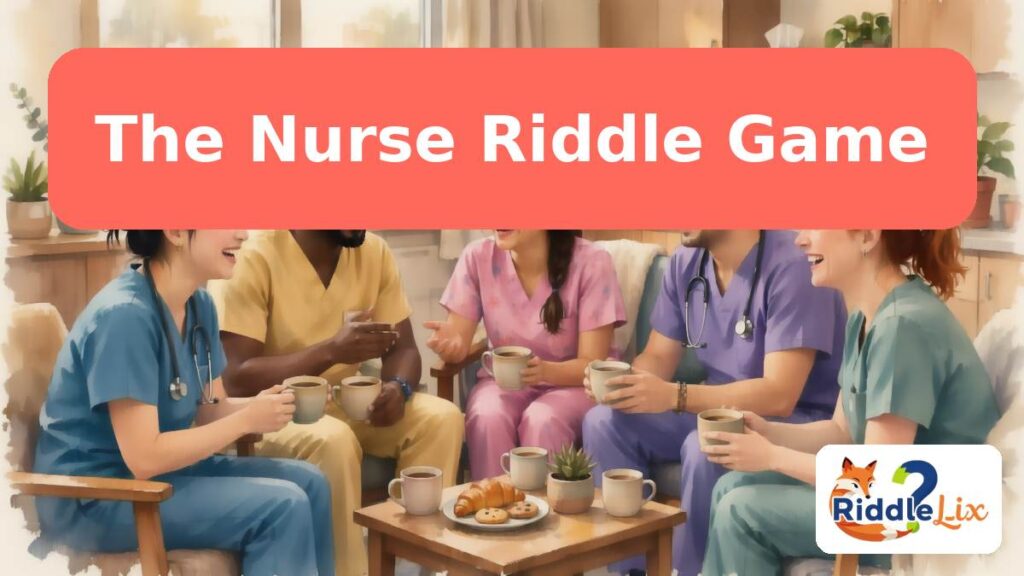
🎮 How to Play the Nurse Riddle Game
Choose one player to be the Charge Nurse. The Charge Nurse picks one of these riddles for nurses from any round above and reads only the question, keeping the answer hidden like a sealed chart.
Every other player gets three guesses. A correct guess wins a point; a guess that makes the whole break room laugh wins the Charge Nurse’s bonus point, because a good riddle game runs on laughter. For a harder game, award a second point to anyone who can also explain the fact behind the answer.
Pass the charge badge after every riddle, and play until someone reaches ten points. The winner is crowned Chief of Cheer for the day — crowned with a paper nurse’s cap, valued accordingly.
✍️ Make Your Own Riddle for a Nurse
Start with a corner of nursing life you know well: a tool like a stethoscope, a duty like the medication round, or a kindness like a held hand. Write down three true things about it that do not give its name away.
Turn the best fact into a question spoken by the thing itself. “I hug an arm and report two numbers” beats “What is a blood pressure cuff?” every time, because the riddle should let the answer hide in its own voice.
Finish with a one-line answer and a short reason it fits. Test your own riddles for nurses on a colleague: if they solve it on the second or third guess, you have pitched it exactly right.
❓ FAQs
What are riddles for nurses?
Short puzzles drawn from nursing life: the tools on the tray, the rhythm of the shifts, the measurements that matter and the kindnesses patients remember. Each one describes its answer in clues and keeps the name hidden until the guess.
Are these riddles suitable for nursing students?
Absolutely — this collection was written with students in mind. The tools, duties and ward routines are the ones students meet on placement, and the learning round covers mentors, exams and first placements, so the set doubles as a friendly tour of the job.
Can riddles help reduce work stress for nurses?
A short puzzle gives a busy mind a complete change of scene in under a minute, which is why riddles thrive in break rooms. These rounds are deliberately warm and light, made for the pause between one task and the next.
Do riddles improve critical thinking?
Riddles train exactly the habits good nurses use: noticing details, testing guesses against evidence and thinking around a problem from a second angle. The tricky rounds especially reward the same careful observation that a ward round does.
Where can nurses use these riddles?
Anywhere a team gathers: the break room, a classroom, a team meeting or a Nurses Day celebration. Read one aloud at handover, print a round for the staff-room wall, or save the game for a quiet night shift.
🌟 Conclusion
From the beep of a monitor to the hush of the night ward, nursing turns into puzzles remarkably well. Its tools measure, its routines protect, and its kindnesses stay with patients long after the charts are closed.
Keep these riddles for nurses for break rooms, classrooms and Nurses Day, and pass the Riddle of the Day on to a colleague who enjoys a slow solve. For the profession itself — how nurses describe the art and science of caring — the Nursing article is a fascinating next read.